Who can benefit from Speech and Language Therapy Services?
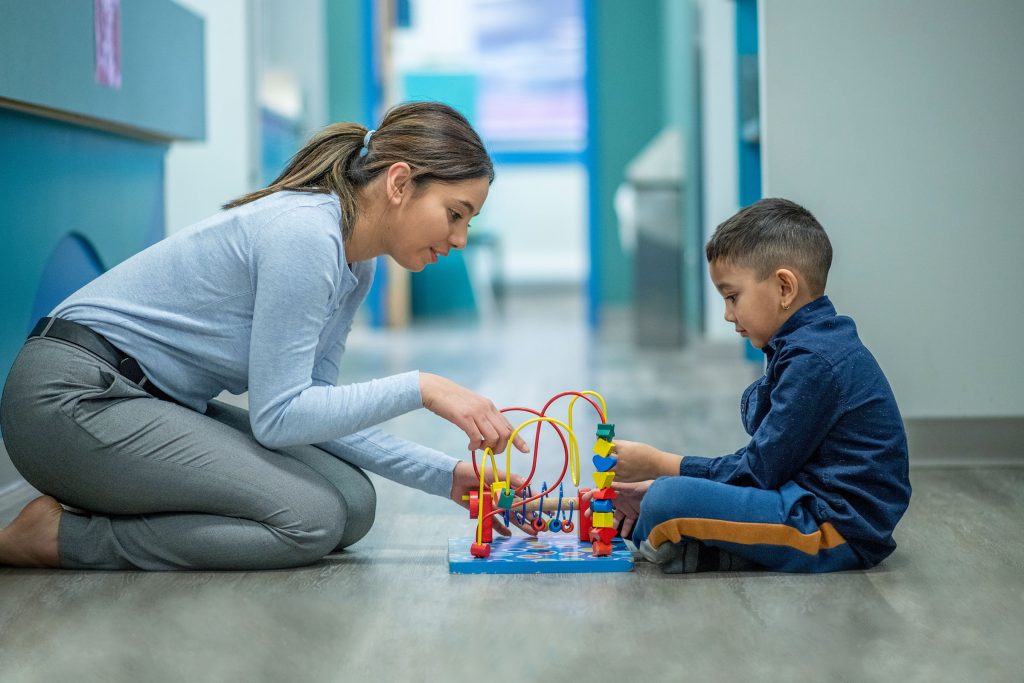
Children require speech-language therapy for a variety of reasons, including but not limited to the following: Hearing impairments Cognitive or other developmental delays Weak oral muscles Birth defects such as cleft lip or cleft palate PDD/Autism Central Auditory Processing Disorder Apraxia Motor planning problems Respiratory problems (breathing disorders) Swallowing disorders Traumatic brain injury ADD/ADHD Children born prematurely Does your child demonstrate any of the following? Increased frustration during communication attempts Preservative or repetitive behaviors Decreased interest in social situations by age 24 months Loss of skills previously mastered Decreased eye-contact Lack of imitation skills Decreased/lack of appropriate play skills Absent pointing by one year of age Difficulty with transitions Limited sound repertoire Significant sound errors/difficulty with overall intelligibility Inconsistent sound errors Randomly says a word accurately, then doesn’t use it again Limited to no words produced consistently by 16 months Delayed response time Increased need for repetition for response to commands, directions, and questions Speech & Language Warning Signs Pediatric speech and language therapy involves assessing and treating a child’s communication skills. These skills include speech, language, play, and general interaction development. The focus of treatment may be on oral-motor skills, stuttering, tongue thrust, voice, language, articulation, or augmentative communication. If your child has not yet been evaluated for speech and language skills, this is a great place to start.
5 Signs Your Child Might Benefit from Occupational Therapy
1. Difficulty with Fine Motor Skills If your child struggles to grasp a pencil, battles with the buttons on their coat, or finds using utensils a Herculean task, these could be signs they need occupational therapy. These tasks, though small, are mighty in their importance for independence and confidence. 2. Challenges in Meeting Developmental Milestones Every child is a unique story yet to be told, unfolding at their own pace. However, if your child is significantly delayed in milestones such as walking, talking, or self-care activities, it might be time to turn the page with the help of an occupational therapist. 3. Sensory Processing Issues For some children, the world is a cacophony of sights, sounds, and touches, each more overwhelming than the last. If your child seems overly sensitive to sensory input or seeks it excessively, occupational therapy can offer strategies to navigate this sensory world with grace. 4. Social and Emotional Difficulties Children who find the social world puzzling, who wear their hearts on their sleeves a little too often, or who find playtime perplexing, may find a friend in occupational therapy. OT can be the bridge helping children connect with others and manage their emotions effectively. 5. Learning and Attention Challenges School can be a challenging voyage for children who find focusing, staying organized, or following instructions as daunting as sailing against the wind. Occupational therapy can provide the compass to navigate these academic waters more smoothly.
